Friday, March 21, 2014

Spring Cleaning 2014

I am on Spring break right now and I planned to do outings with my own children for most of the days, but it was important to me to spend one full day in my classroom organizing and purging.  I spent eight hours in my room and I'm glad that I did! There is still (always!!) more to do, but it's certainly better than when I started.

I renewed my love for my label-maker.


On the last day before Spring break, I organized my desk drawers again.  No matter how hard I try, it always gets messy over the course of the year.
For my day of spring cleaning my class I had no interruptions and I was able to purge 60% of my thematic resources that I've been collecting since the beginning of my career.  Before going in, I told myself that I was not going to print or prepare any classroom materials.  My day was going to be only for organizing and purging.  It was such a productive day as a result!  I managed to go through ten Sterililite monthly bins and condense down to seven, some of which are now only  around 1/2  full now!


In summer of 2013, my mom sewed curtains to cover up this storage area.  Now that it looks so organized, it doesn't really need to be hidden, but at least it's a lovely sight to see when the curtains are lifted up!


 Consolidating my month boxes allowed me to use the remaining extra empty Sterilite bins to store my math centers, since my previous bins were beginning to overflow.  I really only started to math centers this year.  Previously I've been doing mostly whole-group math with some pull-out, but centers are really the way to go to add differentiation and fun to the day.


 I also completely organized my math tool cart which was previously in a major state of disorganization.


I also labeled more of my teaching area cart drawers.  I keep this cart near the carpet and it stores calendar items, manipulatives we use often, and supplies I need for demonstration purposes like crayons, scissors, whiteboard markers, and the remotes for the Apple TV and projector.


I also reorganized my shelving area a bit.  I'm now using an entire shelf for my upcoming read-alouds, instead of storing them on precious counter space.  Up next on my plan is to replace the ugly magazine holders with some pretty ones.  

Next I cleaned up the kids' writing center. I organized and labeled the drawers. I still want to put pictures that match each label (for the type of paper inside) but I didn't want to spend time creating labels, as that is something I can easily do at home.

 I have to make-do with this shelf setup because there are two teacher desks in my room this year.  Next year there will only be one, so I will have a space for an actual writing center table.  

Next I took all of my students' extra school supplies out of the blue cupboard and organized them more neatly into bins that I had emptied out during "The Big Purge".  I labeled them and stored them in the hallway on some reclaimed shelf space.  Additionally, with the new available storage space I was able to put my out-of-use word work bins (the thinner ones) out of the way, instead of on the counter where they used to sit. 


It's amazing how quickly we as primary teachers can accumulate things.  But with the ever increasing availability of amazing digital teaching resources, and the amount of creativity that I am exposed to on pinterest and on teaching blogs, I just don't feel like I need to stockpile as many things as before.  It feels good that my boxes are no longer filled to bursting, and that the items I REALLY love are much more accessible and easier to find!  


Here is the counter that used to be piled with things at all times.  I'm loving seeing clear counters.  Let's hope it stays that way!

If you have any organization tips, I would love to hear them!  Please comment below.

Update:  A few days after my big spring cleaning, I headed over to Staples and picked up some nicer magazine holders.  Doesn't this make a big difference? I actually can't believe I put up with them the way they used to be!  Yikes!


I swap out my seasonal read-alouds.  Once they have been read to the children, they are added to the classroom library.  I like to maintain a level of "mystery" and excitement about some of my books, which is why they children can't access those particular ones until I'm finished reading them. :)


Tuesday, March 18, 2014

Teacher Tip: Paper Organization

I have been on a quest to organize my classroom for the past number of years.  Every year I'm getting better at it, but there's always room for improvement!

One of my summer projects was to make my binders more visually pleasing, and also make it easier to find what I was looking for.  I created these binder covers and labels and I've really been enjoying how my teacher area looks and functions as a result!  I liked making my own because then I could get as specific as I wanted to, such as with my Sentence Building Through the Year binder.

 Each curriculum area has its own color, so it's super easy to find my admin, science, math, social studies, and language arts resources in seconds.  I also have monthly/thematic binders (the colorful binders shown in the bottom of the "before" image).  I work much better with binders than with file folders.


Something that I discovered by accident is proving to be a handy organization tool for me!  At home we have a bunch of slightly off-white printer paper.  I tend to print most of my masters at home, because I have time to search for just the right printables, and that is also where I create my own.  Now that I have been doing that, I've been loving that I can quickly separate my masters from the student copies.


I used to use a yellow highlighter to mark off my originals, because in general the yellow doesn't show up on subsequent copies.  I might occasionally still do that if I happen to print something at school, but for now, I'm loving my new system!

I have WAY more resources than are shown in the above images.  One of my current goals is to go through my old resources and purge 60% of them.  Yup, I have way too many things in my hallway storage, and it's time to say goodbye, and hopefully send them to better homes!

I hope you've found this tip helpful!  Let me know in the comments below if you have any organization goals that you hope to accomplish before school starts again!  It's never too early to plan :)


Tuesday, March 11, 2014

Leprechaun Fun

We had some St. Patrick's Day fun the other day!  I love reading Leprechaun on the Loose to my students.

 They always get into the drama of the story where Sidney, the main character, is the only one in the class who knows that there is a leprechaun in the room.  However, Sidney's attempts to save the class St. Patrick's Day party from the antics of the leprechaun results in Sidney making things worse, and the teacher and other students blaming Sidney for all of the disasters.  Sidney builds a leprechaun trap and ends up making a deal with the leprechaun.  The leprechaun tells Sidney were a treasure of party supplies is hidden in exchange for his freedom.

After we read and enjoyed the story, the students completed a story map in their reading response journals.  We've spent the last number of weeks learning about characters, character traits, settings, problems and solutions. This book is great for a response, because the problem and solution are all very clear.

 Instead of copying a lot of graphic organizers, I'm trying to minimize paper waste and use their notebooks as much as possible lately.


To create this four-square, I simply instructed the students to fold the page in hot dog style.  That created the vertical line.  The top drawing portion of the exercise book became the top two squares, and the writing line portion of the page became the bottom two squares.

When the students were finished with their story response, I informed them that they would be able to design their own leprechaun trap on a piece of blank paper.  I've done this a number of years in a row now, and the students love it!  Their imaginations go wild, and the seem to love the open-ended nature of the activity.  I've also learned that it is a great activity for fostering oral language.  Even my quietest students are eager to share all about how their leprechaun trap design would work.  Some students take it a step beyond and get artsy with their design.  This student constructed a paper ladder for his trap.


I give the students a few tips to think about.  "What is going to lure your leprechaun to the trap? How will he get stuck?  What will keep him from getting out?  What would make your trap different from someone else trap?  How will it be unique?"

After the students have designed their trap, they write about how it will work.  Next time I will ask the students to write it in a "How To" step-by-step format.


After they were finished they got a 12 by 18 sheet of construction paper and folded it in half like a greeting card.  They then glued the design on one side and their writing on the other.

Then they created a leprechaun to decorate the front.


 I happened to have some gold glitter paper in my art cupboard, and we cut buckles out of it to decorate the leprechaun hats.  So cute!

When the students were finished with all of their activities they were allowed to read or use whiteboards.  I love what one student decided to write about on his whiteboard!


I hope you enjoyed reading about our St. Patrick's Day activities.  If you would like to download my primary lined paper with checklist, you can find it for free here:


If you would like a fun St. Patrick's Day themed Measurement Center you can find it here:


Friday, January 17, 2014

Taming the Morning Madness

Being organized and under control in the morning is so important for any job, but in a primary classroom it is SO vital!  Students come to us in all states of emotions, having had varying amounts of sleep, food, and time to wake up!  I know for me, by the time I'm welcoming my little sweethearts into my classroom, I've been up for 2.5 hours and have been parenting preschoolers already.  There is no time to "fly by the seat of my pants." Predictability and routine are definitely in order when it comes to starting our grade one day! This is a pretty long post, but I have included a freebie at the bottom of the post!  Enjoy :)

I would like to share some of what I do to start the day out right!

The afternoon before....

Before I leave my classroom at the end of a day, I make sure that my desk is clean.  In the past my desk was a collecting place for random papers and work.  Now I try to tidy it every day.  Piles do emerge in other spots, but I'm getting better at dealing with them!  

I make sure my dayplans are ready and in the binder on my desk, and the day's work is in the day drawer behind my desk. 
Also,  pencils are sharpened!  I do not allow my students to sharpen their own pencils, as it causes too many disruptions.  So, I leave sharp pencils on each table, and have extras on my desk.  Since I have switched to this method, pencil frustration has virtually disappeared.  I think so far this year I have only heard the phrase "I don't have a pencil" around 3 times!


Before leaving, I also make sure that my students' tables are set up with their morning work at their spots.  This way, if something goes wrong and I can't get to work as early as I'd like, everything is ready to go.  Also, if I happen to be away, a substitute would find everything set up and ready to go! 

In the morning.....

Greeting
My students line up outside and I greet them at the door right after the warning bell rings.  As they walk down the hallway, I join them, by starting walking next to the person who is at the front of the line. Then I adjust my pace so that I eventually end up at the end of the line (walking forward, but slower than the line-up).  This gives me the ability to chat briefly with each child, and at the very least, greet each child by name.  I have realized that I have 3 students who NEED this chat time before the day begins.  If I don't give them my undivided attention to hear their little stories before going into the classroom and starting our day, they just can't settle in and get going.  


Hallway organization
As is typical for many primary classrooms, my students each hang up their backpacks and jackets and change outdoor and indoor shoes.  At the beginning of the year I had all of my students using the hooks, but I quickly realized that some of the students were much too crowded to handle the hooks.


 So, I purchased three rubbermaid bins.  Three students who need more space for their things, and have a harder time keeping their belongings on the hooks, were assigned these bins.  They can just toss their shoes and backpack into it, and place their jacket on top.  It has saved me countless headaches, and it helps keep our hallway neater!  


Home Communication
The first thing my students do when they come into the classroom is place their library books and home communication books (BEE books) into the bins by the door.  In the books is a zippered pencil pouch, where notes from home and permission forms and money, etc. can be stored.  While the students are settling into their spots, I go through the BEE books and take out any forms I need.  I also place the BEE books in numerical order.  I put numbers on the upper right corner of the BEE books, so I can quickly organize them.  I have a correlating class list, so I can quickly tell who has not handed their BEE book in yet!  I can't believe it, but it took me 7 years of doing BEE books before I finally started numbering them!   It's glorious now.  I'm sure you can agree that saying to the class, "Anyone who hasn't handed _____ in, please do it now" is an almost meaningless effort!  This way, I can actually figure out which student to remind.  I do aspire one day to come up with a system that won't even require reminders, but we're working on it :)
Morning Work
After my students have handed in their books, they sit down at their table spot and begin working on their morning work.  This is a vital component to our morning, as it is predictable, age-appropriate, and sets the tone that we are settling into work time.  In fall we do morning work 3 days per week (and table toys the other days), but by October we do it on a daily basis.  Our morning work has printing practice, phonics, and math, and more.  The morning work builds independence and confidence, because the skills build slowly from day to day, and have scaffolding such as dotted words and examples when new skills are introduced.  While students are working on their morning work, I am going through their BEE books, taking attendance, and doing other clerical duties.  I also chat with students who need a little more one-on-one attention.

Book Shopping
Once the students have completed their page, they hand it into the In Box and go book shopping.  This means that they take their book box and decide if they want to put any books away and "shop" for new ones.  They are expected to have around 5 leveled "good fit" books, and 5 choice books.  My library is organized with one shelf of leveled readers from A-H, and three other areas of themed books. I have pictured around half of my library here.  These photos are old, from a different arrangement of my room! 

Buddy Reading
Once students are finished book shopping, they may either buddy read or read to self.  Most of the time students will choose buddy reading.  I have trained the students using the Daily Five model of explicit instruction on the behavior expectations during buddy reading.  Usually the students do not need any reminders to stay on task.  They love buddy reading and they really do benefit from having time right at the beginning of the day to dive into books!

Morning Meeting
Usually about 25 minutes after school has begun all students have settled in, have completed morning work, book shopping, and have had a chance to read.  At this time I call all students to put away their book boxes and come to the carpet.  I formally welcome the class, and we begin our first literacy block.  

The Joys!

I love having a predictable schedule in the morning.  The students aren't shoving permission slips at me first thing, they aren't immediately asking for help or wondering what to do.  They build independence knowing that they KNOW what to do next and how to do it.  The morning work and buddy reading times aren't required to be silent working times, so they know that in the morning they will get to chat and be with their friends, just in a calm manner.  I highly recommend coming up with a morning routine that works for you and for your style.  Test out  a few ways and see what feels right for you, and then make it a routine.  You'll be glad you did!  

If you would like a freebie download of my Sharp/Dull Pencils Labels, you can find them here.  
 Freebie
If you are interested in checking out my morning work, you can see it here: 

For work to keep your little ones occupied in meaningful activities during the first week of school, you might want to try out my First Week of School Activities:  

Or, if you want a money saving bundle that includes the First Week of School pack, you can check this out: 

Wishing you peaceful mornings!


Thursday, August 22, 2013

Whole Brain Teaching

I was introduced to Whole Brain Teaching from the Kindergarten teachers at my school. We spent collaborative meetings watching Whole Brain Teaching videos and discussing how we would implement the ideas into our own classrooms. One of my favourite components of Whole Brain Teaching is their Five Classroom Rules. You can find them here.
For the way that I teach, rule number three doesn't really work for me (Raise your hand for permission to leave your seat), so I use an alternate rule: "Respect yourself, respect others, respect this place."
Because I use that alternate rule, I am unable to use most of the WBT rule posters that are out there on Teachers Pay Teachers and blogs. So, I decided to create my own set and share them with anyone else who is interested. For that set, I included the traditional rule set, as well as my alternate rule #3. I hope you enjoy! You can download them for free at my Teachers Pay Teachers store. Click the image to go check it out!

Friday, July 5, 2013

Flash Freebie! ~Name Plates~

For the rest of the day (July 5th) my new desk name plates are free!  You can grab them here:
http://www.teacherspayteachers.com/Product/Desk-Name-Plates-757244

How handy to have a digital file of name plates so that you can print off as many as you need, and if some get ruined throughout the year, or if you receive a new student, you can just print off more!

There are several other styles available in the packet.  These are free for today only, but they will be available for purchase after that point!

Enjoy :)

~Sonja

Thursday, June 6, 2013

It's Not Fair

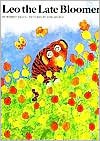
Lately in my classroom we've been talking about fairness.  It's such a difficult concept for students to realize that fair doesn't always mean equal.  I found some books that deal with fairness and how we are all unique and have different needs and strengths.  Here are some books that are great for these types of discussions. I always start off the year with Leo the Late Bloomer.  It helps the students to understand why they might not get to meet with me as often for reading groups (if they are a more advanced reader) or why I need to work with them more frequently.  It also helps with the discussions about "just right" books.  Leo might be able to read the pictures of a book but not the words.  And that's ok!

The first book is a great way to introduce the concept of fairness at any time of year.  The students love it, because it is filled with silly surprises!

Spoon is an adorable book.  The spoon starts thinking that everyone else has it better (knives and forks), but then he comes to realize that he's pretty special as well!

Cookies: Bite Size Life Lessons deals with more than just fairness, but it's a great book as part of a series on character.  All of the life lessons relate to cookies: generosity, patience, respect, fairness, etc.

It's Mine is a classic book about fairness and sharing!  

The Rainbow Fish is another classic book about fairness and sharing.  There are also many ways you can extend this book into a week-long theme!  Just search on Teachers Pay Teachers!  


Leo the Late Bloomer: A great way to start your year off right, so that your students understand that it's ok to be at different stages of learning!  We all learn at our own pace.